

Neck pain physiotherapy Richmond Hill: Physiotherapy for neck pain involves assessing how the neck moves, what activities aggravate symptoms, and whether posture, muscle strain, joint stiffness, daily habits, or a previous injury may be contributing. Treatment may include education, hands-on therapy, mobility work, and guided exercise to help reduce pain, restore movement, and improve the neck’s tolerance for work, sleep, driving, and everyday activity.
Why Neck Pain Can Keep Returning | Neck pain clinic Richmond Hill
Neck pain does not always begin with one clear injury. It may build gradually during a busy period at work, after more time on a computer or phone, or when the neck remains in one position for long stretches. Symptoms may improve temporarily and then return when the same demands increase again.
The neck supports the head while allowing movement in several directions. Muscles, joints, connective tissues, and nerves all contribute to this job. When pain develops, the cause may involve one structure or a combination of factors. This is why a useful assessment looks beyond the painful spot rather than assuming that every stiff neck needs the same treatment.
Posture, Desk Work, and Screen Time
Posture can influence neck symptoms, especially when one position is held for a long time. Sitting with the head forward, looking down at a laptop, or working with a monitor placed too far to one side may increase the demand on neck and shoulder muscles. Phone use can create a similar issue when the screen stays well below eye level.
There is no single perfect posture that everyone must maintain all day. Even an upright position can become uncomfortable when it is held without a break. Changing position regularly, adjusting the workspace, and building enough physical capacity for daily demands may be more practical than trying to sit rigidly.
Sleep Position and Muscle Strain
Some people wake with pain after sleeping with the neck rotated or poorly supported. A pillow that holds the head too high or too low may feel uncomfortable, although the right setup depends on body shape and sleeping position. Rather than prescribing one pillow for everyone, a physiotherapist may discuss how the neck is positioned and whether symptoms consistently relate to sleep.
Muscle strain can also follow unfamiliar exercise, repeated lifting, carrying a heavy bag, or a sudden movement. These factors do not prove the source of pain in an individual patient, but they provide useful context during assessment.
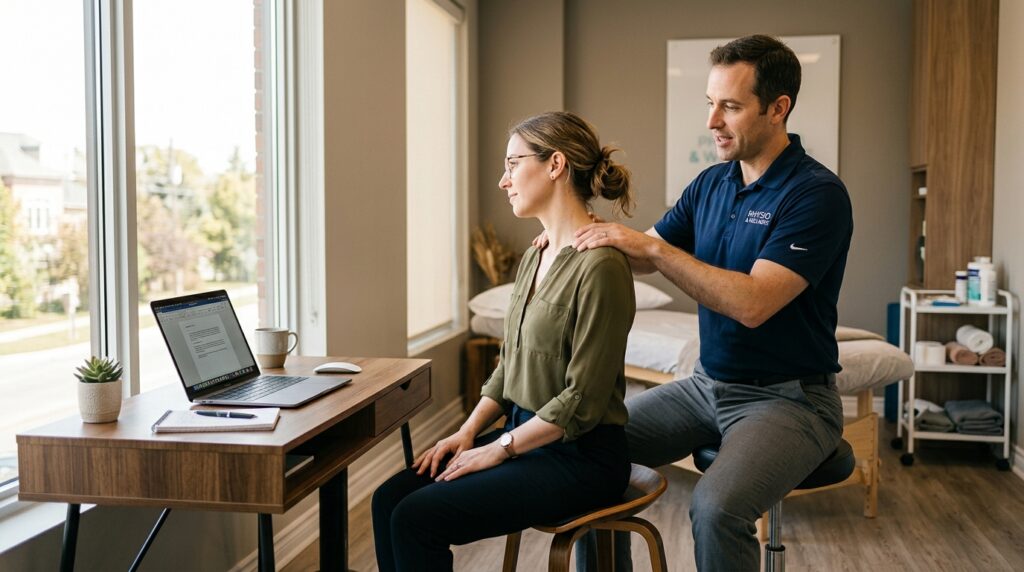
Richmond Hill neck pain physiotherapy | Neck Pain After Whiplash or Another Injury
A whiplash type injury can occur when the head moves rapidly backward and forward, commonly during a vehicle collision but also during a fall or sports incident. Symptoms may include neck pain, stiffness, reduced movement, headaches, or discomfort around the shoulders. Some people recover steadily, while others have symptoms that persist or recur.
The details of the event matter. A physiotherapist or physician may ask about the force involved, when symptoms began, whether there was loss of consciousness, and whether there are neurological symptoms such as numbness, tingling, or weakness. A significant or recent injury should be assessed before starting a general exercise routine found online.
How Neck Pain Is Typically Assessed in Richmond Hill Neck Pain Physiotherapy
An assessment begins with the history of the problem. The physiotherapist may ask where the pain is felt, when it started, which positions or movements affect it, whether symptoms travel into the shoulder or arm, and how the problem influences work, sleep, driving, and recreation. Previous injuries, medical conditions, and current medications may also be relevant.
The physical examination may look at posture, neck and shoulder movement, muscle function, joint mobility, and the way the neck responds to repeated or sustained positions. When appropriate, the physiotherapist may check sensation, reflexes, or strength to consider whether a nerve may be involved.
Assessment brings the history, physical findings, daily habits, and personal goals together. If the presentation suggests medical investigation is needed, the physiotherapist should recommend appropriate follow up.
How Physiotherapy May Help Neck Pain | neck pain clinic Richmond Hill
Neck pain care fits within the broader physiotherapy services in Richmond Hill offered by Remedy Physio Clinic. The clinic identifies neck pain as one of the conditions it treats, but care should still be selected according to the individual assessment rather than a standard routine.
Physiotherapy may help by improving movement, building strength and endurance, and making daily activity feel more manageable. Education can help a patient understand which movements are safe, how to vary demanding positions, and how to return gradually to activities that have been avoided.
Physiotherapy for neck pain | Manual Therapy for Stiffness and Mobility
When appropriate, manual therapy may be used to address neck stiffness and joint mobility. This can include specific hands-on techniques applied to joints or surrounding soft tissues, selected according to the assessment and the patient’s comfort.
Hands-on care should have a clear purpose. It may help make movement more comfortable or support a short term change in mobility, but it is usually most useful when connected to education and active rehabilitation. The physiotherapist should explain what is being done, why it is being recommended, and what response will be monitored.
Guided Exercise and Movement Education | Physiotherapy for neck pain
Exercise for neck pain may involve gentle mobility, coordination, or strengthening for the neck and shoulder region. The starting point should match current symptoms and ability. Someone with an irritable recent strain may begin differently from someone managing recurring stiffness related to long periods of desk work.
Progress should be gradual and connected to function. The goal may be turning the head more comfortably while driving, working at a screen with fewer interruptions, sleeping more easily, or returning to exercise. A home program should be manageable, clearly explained, and adjusted when symptoms or abilities change.
Posture education may focus on workspace choices, regular movement, and awareness of habits that repeatedly aggravate symptoms. The aim is to build options and confidence, not create fear of normal movement.

Monitoring Progress and Knowing When to Reassess | Richmond Hill neck pain physiotherapy
Neck pain recovery is not always linear. Progress may appear as improved movement, fewer painful episodes, better sleep, greater work tolerance, or less concern about ordinary activity. The physiotherapist may reassess movement, strength, function, and response to the home program as care continues.
If pain is worsening, repeatedly returning, or not responding as expected, the working explanation and treatment plan should be reviewed. No clinic can responsibly guarantee how quickly neck pain will resolve, but a personalized plan should provide clear goals and adapt to the patient’s response.
If ongoing or recurring neck pain is affecting your work, sleep, driving, or daily life, book an appointment with Remedy Physio Clinic for an assessment.
Neck pain accompanied by numbness, tingling, or weakness down the arm should be evaluated by a physiotherapist or physician before beginning exercise. Symptoms following a significant injury also require appropriate assessment so more serious causes can be considered before treatment starts.
Neck Pain Physiotherapy Richmond Hill FAQs
Physiotherapy generally involves assessing neck movement, posture, muscle function, joint mobility, daily habits, and relevant neurological findings. Treatment may include education, manual therapy, mobility work, and guided exercise.
Contributing factors may include prolonged positions, desk work, computer or phone use, muscle strain, sleep position, repeated lifting, and previous injuries. The relevant factors differ between patients and should be identified through assessment.
Holding the head forward or looking down for long periods may increase the demand on the neck and shoulder muscles. However, there is no single perfect posture, and regularly changing position may be more practical than trying to sit rigidly all day.
Extended screen use may contribute when the neck remains in one position for a long time or the screen is poorly positioned. Workspace adjustments, movement breaks, and improved physical capacity may help manage these demands.
Some people notice pain after sleeping with the neck rotated or poorly supported. Pillow and sleep position recommendations should account for the person’s body shape, preferred sleeping position, and symptom pattern.
Physiotherapy may support recovery following an appropriately assessed whiplash-type injury. Because symptoms and injury severity vary, neck pain after a collision, fall, or significant sports incident should be evaluated before beginning a general exercise routine.
The physiotherapist may review when symptoms began, what affects them, and whether they travel into the shoulder or arm. The physical assessment may examine posture, movement, muscle function, joint mobility, strength, sensation, and reflexes when appropriate.
Manual therapy may be used to address neck stiffness, joint mobility, or surrounding soft tissues. It may help movement feel more comfortable, particularly when combined with education and active rehabilitation.
Exercises may focus on mobility, coordination, strength, or endurance in the neck and shoulder region. The starting point and progression should reflect the patient’s symptoms, ability, daily activities, and recovery goals.
Neck pain accompanied by numbness, tingling, weakness, or symptoms extending down the arm should be assessed by a physiotherapist or physician. Symptoms following a significant injury also require evaluation before exercise begins.
Please fell free to read our client's testimonials on our Google page or leave us a review about your personal experience at Remedy Physio Clinic. Choose a Physiotherapy Clinic > How to choose a physiotherapy Clinic