

Sports Injury Treatment Richmond Hill | Sports injuries can affect athletes of all ages and activity levels. Whether someone participates in competitive sports, recreational activities, running, cycling, fitness training, or weekend leagues, injuries can interrupt performance, limit mobility, and affect everyday life. Many individuals searching for sports injury treatment in Richmond Hill are looking for effective ways to recover, return to activity safely, and reduce the risk of future injuries.
Sports injuries can occur suddenly during a single event or develop gradually over time due to repetitive stress. Understanding the causes of sports injuries, recognizing common symptoms, and learning how physiotherapy and sports rehabilitation may help are important steps in supporting long-term recovery.
Quick Answers About Sports Injury Treatment | Sports Injury Treatment Richmond Hill
What is a sports injury?
A sports injury is damage or irritation affecting muscles, tendons, ligaments, joints, or other soft tissues during physical activity.
Can physiotherapy help sports injuries?
Physiotherapy may help improve mobility, strength, flexibility, movement quality, and overall function during recovery.
What is sports rehabilitation?
Sports rehabilitation is the process of restoring mobility, strength, confidence, and physical performance following a sports-related injury.
How long does recovery after a sports injury take?
Recovery timelines vary depending on the injury, severity, activity demands, and individual rehabilitation progress.
What Is a Sports Injury?
A sports injury refers to damage or irritation affecting muscles, tendons, ligaments, joints, bones, or other soft tissues that occurs during physical activity or athletic participation.
Sports injuries are not limited to professional athletes. They can affect anyone who participates in activities involving movement, exercise, or repetitive physical demands.
Common symptoms may include:
- Pain during activity
- Swelling
- Reduced mobility
- Joint stiffness
- Muscle weakness
- Loss of flexibility
- Difficulty performing specific movements
- Reduced athletic performance
The severity of symptoms can vary significantly depending on the nature of the injury and the structures involved.
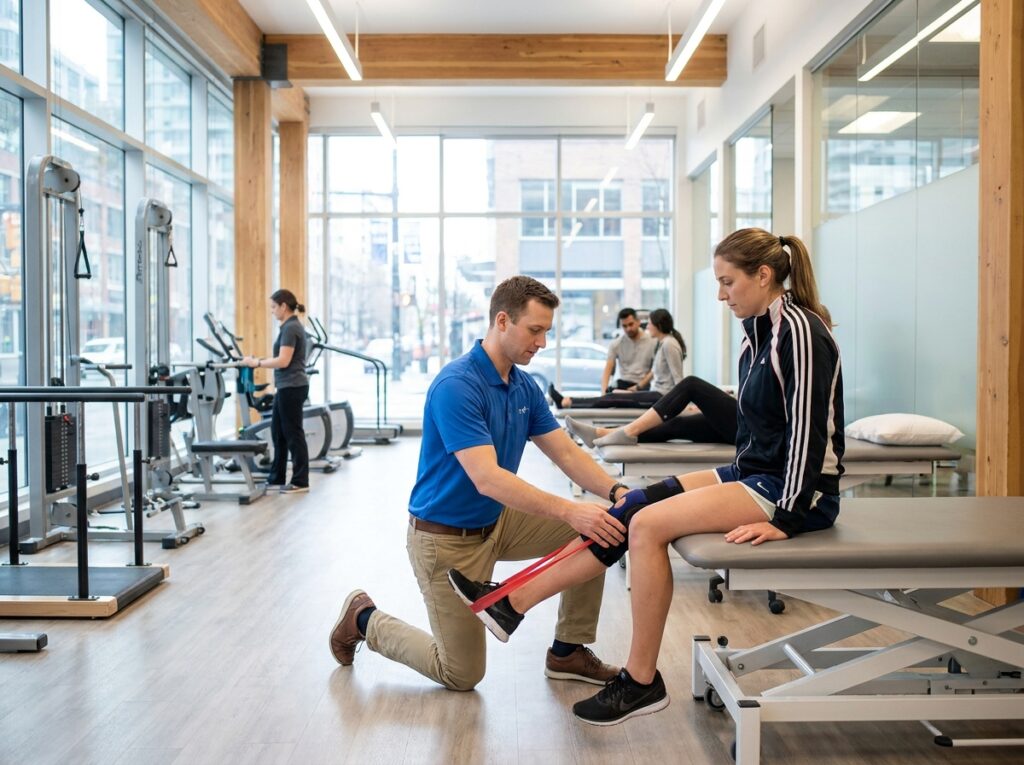
Common Types of Sports Injuries |Sports Injury Treatment Richmond Hill
Sports injuries can affect nearly every area of the body.
Some of the most common injuries include:
Muscle Strains
A muscle strain occurs when muscle fibers are overstretched or overloaded. Hamstring strains, calf strains, and quadriceps strains are common examples.
Ligament Sprains
Ligaments help stabilize joints. Ankle sprains and knee sprains frequently occur during sports involving jumping, cutting, or rapid direction changes.
Tendon Injuries
Tendons connect muscles to bones. Repetitive activity may contribute to tendon irritation and discomfort.
Running Injuries
Running places repetitive stress on the lower body. Common running injuries may affect the knees, hips, feet, calves, and Achilles tendon.
Shoulder Injuries
Activities involving throwing, lifting, or repetitive overhead movements can contribute to shoulder-related injuries.
Knee Injuries
The knee is one of the most commonly injured joints in sports due to its role in movement, stability, and force absorption.
What Causes Sports Injuries?
Sports injuries can result from many different factors.
Common contributors include:
- Poor movement mechanics
- Muscle weakness
- Limited flexibility
- Inadequate recovery
- Overtraining
- Sudden increases in activity
- Improper technique
- Previous injuries
- Poor footwear
- Joint mobility restrictions
Often, injuries develop because multiple contributing factors are present simultaneously rather than a single cause.

Sports Injury Physiotherapy Richmond Hill
Sports injury physiotherapy in Richmond Hill focuses on helping individuals recover from injuries while addressing the underlying factors that may have contributed to the problem.
Physiotherapy involves a detailed assessment of movement, mobility, strength, flexibility, posture, and activity demands.
The goal is not only to address symptoms but also to help improve overall function and support a safe return to activity.
Sports Injury Physiotherapy Richmond Hill | An assessment may evaluate:
- Movement patterns
- Joint mobility
- Muscle strength
- Flexibility
- Balance
- Functional limitations
- Sport-specific demands
- Previous injury history
The information gathered during assessment helps guide the development of an individualized treatment plan.
Why Early Assessment Matters
Sports Injury Physiotherapy Richmond Hill | Many athletes attempt to continue training despite symptoms. While this may sometimes seem manageable initially, unresolved issues can worsen over time.
Early assessment may help identify:
- Movement restrictions
- Muscular imbalances
- Biomechanical concerns
- Training-related factors
- Areas of weakness
- Mobility limitations
Addressing these factors early may help reduce the likelihood of prolonged recovery periods.
Sports Rehabilitation Richmond Hill
Sports rehabilitation refers to the process of restoring function, mobility, strength, and confidence following a sports-related injury.
Recovery is often more complex than simply waiting for pain to disappear. Athletes frequently need to regain strength, coordination, endurance, flexibility, and sport-specific movement capacity before returning to full participation.
Sports Rehabilitation Richmond Hill | Sports rehabilitation may focus on:
- Mobility restoration
- Strength development
- Movement quality
- Balance training
- Functional exercise progression
- Return-to-sport preparation
- Performance optimization
A structured rehabilitation plan helps ensure that recovery progresses appropriately while reducing the risk of reinjury.
Running Injury Treatment
Running is one of the most popular forms of exercise, but repetitive loading can place significant demands on the body.
Running injury treatment often focuses on identifying factors that contribute to excessive stress on tissues.
Running Injury Treatment | Common running injuries may involve:
- Runner’s knee
- Achilles tendon irritation
- Shin discomfort
- Plantar fascia irritation
- Hip pain
- Calf strains
- Hamstring strains
- Lower back discomfort
- Treatment may involve assessment of:
- Running mechanics
- Mobility limitations
- Strength deficits
- Training volume
- Footwear considerations
- Recovery habits
Because every runner is different, treatment plans should be tailored to individual needs rather than relying on a one-size-fits-all approach.
Sports Injury Physiotherapy and Recovery | Running Injury Treatment | Recovery After a Sports Injury
What is sports injury physiotherapy?
Sports injury physiotherapy focuses on assessing movement, strength, mobility, flexibility, and functional limitations following an injury.
Can physiotherapy help running injuries?
Physiotherapy may help identify movement limitations, strength deficits, and training-related factors contributing to running injuries.
Why is sports rehabilitation important?
Sports rehabilitation helps athletes gradually regain mobility, strength, endurance, and confidence before returning to activity.
When should I seek treatment for a sports injury?
Professional evaluation may be beneficial if symptoms persist, worsen, or interfere with sports participation and daily activities.
Recovery After a Sports Injury
One of the most important aspects of sports injury management is understanding the recovery process.
Recovery after a sports injury involves more than symptom improvement. Athletes often need to regain confidence, rebuild physical capacity, and restore movement quality before returning to activity.
Key components of recovery may include:
- Managing activity levels
- Gradually restoring mobility
- Improving flexibility
- Rebuilding strength
- Enhancing stability
- Improving endurance
- Progressing toward sport-specific demands
Recovery After a Sports Injury | A gradual and structured approach can help support safer participation while minimizing the risk of setbacks.
Common Challenges During Recovery
Athletes frequently encounter obstacles during rehabilitation.
Some common challenges include:
- Returning to activity too quickly
- Ignoring early warning signs
- Inconsistent exercise participation
- Fear of reinjury
- Incomplete recovery
- Loss of conditioning
- Frustration with recovery timelines
Education and proper guidance can help individuals navigate these challenges more effectively.
How Physiotherapy Supports Sports Injury Recovery
Physiotherapy is commonly used throughout the recovery process because it addresses multiple aspects of rehabilitation.
Recovery After a Sports Injury | Potential areas of focus include:
- Pain management strategies
- Mobility improvement
- Flexibility enhancement
- Strength development
- Movement retraining
- Functional progression
- Sport-specific preparation
The treatment plan is typically adjusted as recovery progresses and goals evolve.
Returning to Sports Safely
Returning to sports after an injury should be based on function rather than simply the absence of pain.
Athletes often need to demonstrate:
- Adequate strength
- Good movement quality
- Functional stability
- Activity tolerance
- Confidence in movement
- Readiness for sport-specific demands
A gradual progression helps reduce unnecessary risk and supports long-term participation.
Preventing Future Sports Injuries
Injury prevention is an important part of sports rehabilitation.
Helpful strategies may include:
- Maintaining strength and flexibility
- Following proper training progression
- Allowing adequate recovery
- Using proper technique
- Addressing movement limitations
- Managing training loads
- Monitoring fatigue levels
- Continuing with injury prevention exercises
Developing healthy training habits can support both performance and long-term physical health.
The Importance of Individualized Treatment
No two athletes are exactly alike. Even when injuries appear similar, contributing factors may differ significantly.
For example, two runners with knee pain may have entirely different causes involving mobility, strength, training volume, footwear, or movement mechanics.
Personalized assessment and treatment help ensure that care is based on individual needs rather than assumptions.
Key Takeaways About Sports Injury Recovery | Sports Rehabilitation Richmond Hill
Sports injuries can affect muscles, tendons, ligaments, joints, and other soft tissues.
Common injuries include strains, sprains, tendon irritation, running injuries, shoulder injuries, and knee injuries.
Sports injury physiotherapy focuses on improving mobility, strength, flexibility, movement quality, and functional performance.
Sports rehabilitation helps individuals safely progress back to physical activity and sport participation.
Individualized assessment and treatment are important for supporting long-term recovery and reducing the risk of future injuries.
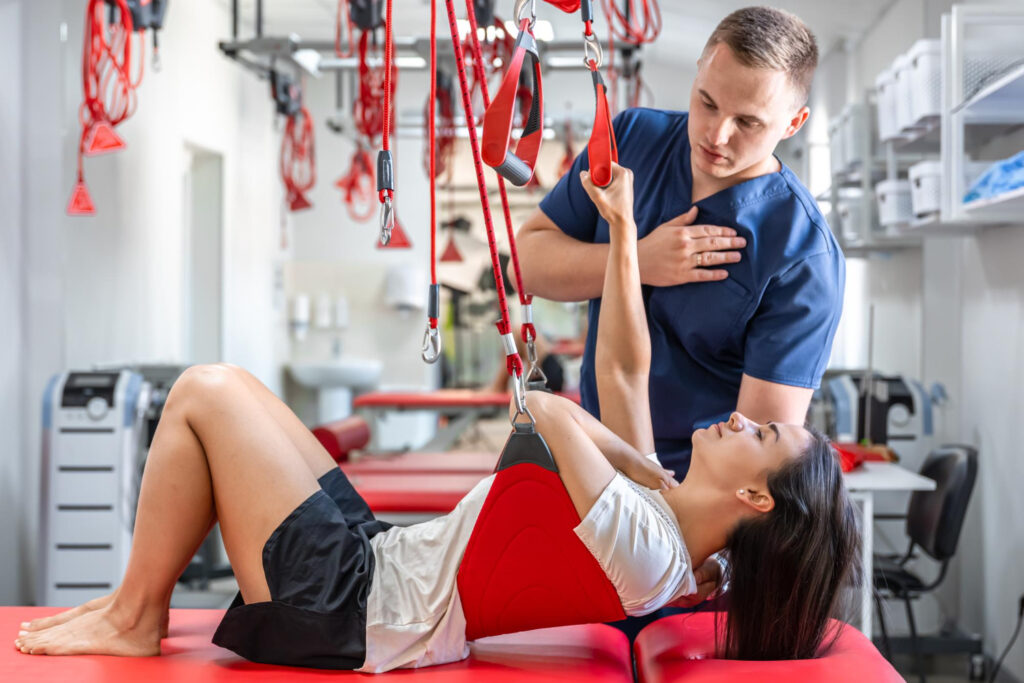
Sports Injury Treatment in Richmond Hill
Individuals seeking sports injury treatment in Richmond Hill often want to return to their activities safely and confidently. Whether the concern involves a muscle strain, ligament sprain, tendon irritation, running injury, or overuse condition, proper assessment and rehabilitation play important roles in recovery.
Sports injury physiotherapy and sports rehabilitation focus on improving mobility, restoring function, addressing contributing factors, and supporting long-term performance. Through individualized treatment and progressive rehabilitation strategies, many athletes and active individuals can work toward returning to the activities they enjoy while reducing the risk of future injuries. Sports Rehabilitation Richmond Hill
Frequently Asked Questions
What is a sports injury?
Summary: A sports injury affects muscles, tendons, ligaments, joints, bones, or soft tissues during physical activity.
Full answer: A sports injury is damage or irritation affecting muscles, tendons, ligaments, joints, bones, or soft tissues during physical activity.
What are the most common sports injuries?
Summary: Common sports injuries include strains, sprains, tendon problems, running injuries, shoulder injuries, and knee injuries.
Full answer: Common sports injuries include muscle strains, ligament sprains, tendon injuries, running injuries, shoulder injuries, and knee injuries.
Can physiotherapy help sports injuries?
Summary: Physiotherapy may support mobility, strength, flexibility, movement quality, and function after a sports injury.
Full answer: Physiotherapy may help improve mobility, strength, flexibility, movement quality, and overall function following a sports injury.
What is sports rehabilitation?
Summary: Sports rehabilitation helps restore mobility, strength, function, and confidence after a sports-related injury.
Full answer: Sports rehabilitation is the process of restoring mobility, strength, function, and confidence following a sports-related injury.
What causes sports injuries?
Summary: Sports injuries may be caused by training load, movement mechanics, weakness, flexibility limits, and inadequate recovery.
Full answer: Sports injuries may result from overtraining, poor movement mechanics, muscle weakness, limited flexibility, inadequate recovery, or sudden increases in activity.
What is a running injury?
Summary: A running injury develops from repetitive physical demands placed on the body during running.
Full answer: A running injury refers to pain or dysfunction that develops due to the repetitive demands placed on the body during running activities.
How long does recovery after a sports injury take?
Summary: Recovery time depends on the injury type, severity, health factors, and rehabilitation progress.
Full answer: Recovery timelines vary depending on the injury, severity, individual health factors, and rehabilitation progress.
Can I continue exercising with a sports injury?
Summary: Whether you can continue exercising depends on the injury and your individual situation.
Full answer: The answer depends on the type of injury and individual circumstances. A healthcare professional can provide guidance based on assessment findings.
Why is early treatment important?
Summary: Early treatment may help identify contributing factors before symptoms become more severe or prolonged.
Full answer: Early assessment may help identify contributing factors and reduce the likelihood of symptoms becoming more severe or prolonged.
What happens during sports injury physiotherapy?
Summary: Sports injury physiotherapy may include assessment of movement, mobility, strength, flexibility, and sport-specific needs.
Full answer: A physiotherapist may assess mobility, strength, flexibility, movement patterns, functional limitations, and sport-specific demands.
Can sports injuries be prevented?
Summary: Proper training, recovery, strength, flexibility, and movement quality may help reduce sports injury risk.
Full answer: While not all injuries can be prevented, proper training, recovery, strength development, flexibility, and movement quality may help reduce risk.
When should I seek treatment for a sports injury?
Summary: Treatment may be helpful if pain persists, symptoms worsen, mobility is limited, or activity becomes difficult.
Full answer: Professional evaluation may be beneficial if pain persists, symptoms worsen, mobility is limited, or activity participation becomes difficult.
Please fell free to read our client's testimonials on our Google page or leave us a review about your personal experience at Remedy Physio Clinic. Top 7 Most Common Sports Injuries > Read about Sport Injuries