
Dizziness and Vestibular Rehab Richmond Hill | Dizziness is a broad term that may describe lightheadedness, unsteadiness, disorientation, or a sense that you might lose your balance, while vertigo refers more specifically to a false feeling that you or your surroundings are moving or spinning. Vestibular rehabilitation may be worth discussing with a qualified health care professional when these symptoms recur, are triggered by movement or position changes, affect balance, or make it difficult to keep your vision steady while moving.
The distinction can help when describing an experience to a clinician, but it does not identify the cause. Individual assessment is important before deciding whether vestibular rehabilitation fits the situation.
Dizziness and Vertigo Are Related but Not Identical
Dizziness can mean different things to different people. One person may feel faint or lightheaded. Another may feel off balance while walking, as though the floor is unstable. Someone else may describe mental fogginess, floating, or difficulty orienting themselves in a busy environment. The National Institute on Deafness and Other Communication Disorders describes dizziness as a term that can include both faintness and an intense spinning sensation, which is one reason precise descriptions matter. NIDCD also explains that balance depends on information from the eyes, inner ears, muscles, and touch sensors working together.
Vertigo is narrower. It describes an illusion of motion when no corresponding movement is occurring. Some people describe the room spinning, while others feel as though they are turning, tilting, or being pulled. An episode may be brief or may last longer, but duration alone does not reveal why it happened.
Neither word is a diagnosis. Saying that an experience feels like vertigo can help a health care professional understand the sensation, but it does not establish a specific condition. Individual causes vary, and similar symptoms can arise for different reasons.
Compare the Sensation, Trigger, and Effect on Daily Life
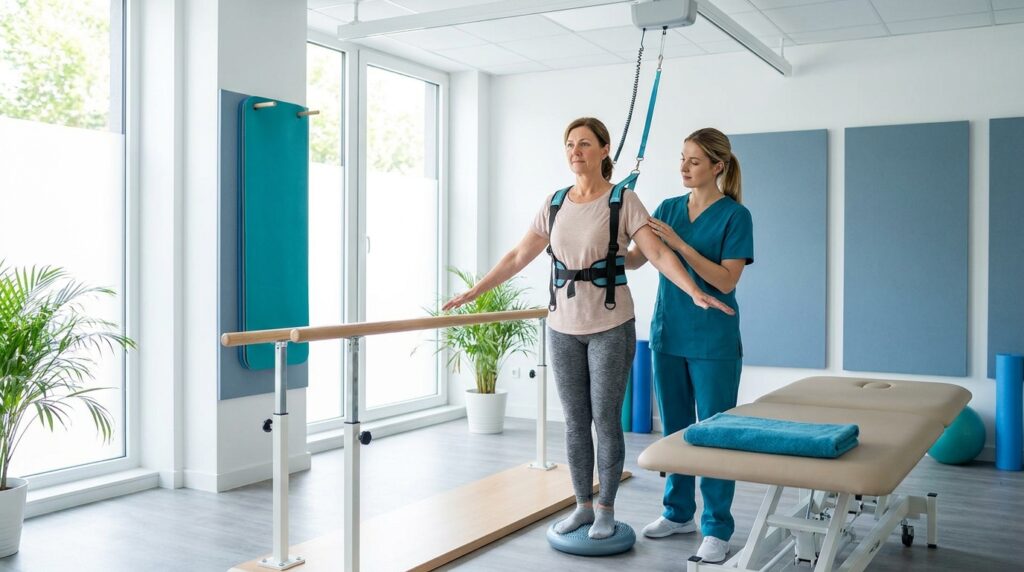
When deciding whether to seek an assessment, it may help to notice three features: what the sensation feels like, what appears to bring it on, and how it affects daily activity. These observations are more useful than trying to diagnose yourself online.
A brief spinning sensation when rolling over in bed, looking upward, bending down, or getting up may lead someone to explore vestibular care. General unsteadiness while walking, turning, or moving through a crowded space may be another reason. Some people notice that their surroundings appear to bounce or blur when they walk or turn their head, making it difficult to keep vision steady.
Other people do not report spinning. They may feel less stable in dim lighting, cautious on stairs, or uncomfortable when moving quickly between visual targets.
No pattern points to only one cause. Tracking when symptoms occur, how long they last, and what movements are involved may help during an assessment.
What Vestibular Rehabilitation Is Designed to Address
Vestibular rehabilitation is an exercise based approach used for certain dizziness, balance, and visual stability concerns. The vestibular system is associated with the inner ear and works with vision, the brain, and sensory information from the body to help maintain balance and a stable view of the environment during movement.
Vestibular rehabilitation may use carefully selected activities intended to support balance, movement confidence, and the ability to keep a visual target clear while the head moves.
This is not simply a general fitness program. According to the Cleveland Clinic’s medically reviewed overview, vestibular therapy begins with an evaluation and may include gaze control, balance retraining, walking tasks, and strengthening or flexibility work chosen for the individual. The exact approach may differ depending on the symptoms, assessment findings, health history, and tolerance for movement.
Dizziness and Vestibular Rehab Richmond Hill | What an Assessment May Explore
An initial conversation may cover how the symptoms feel, when they began, whether they occur at rest or with movement, how long episodes last, and which activities have become difficult. A clinician may also ask about falls, near falls, hearing or vision changes, headaches, injuries, medications, and relevant medical history.
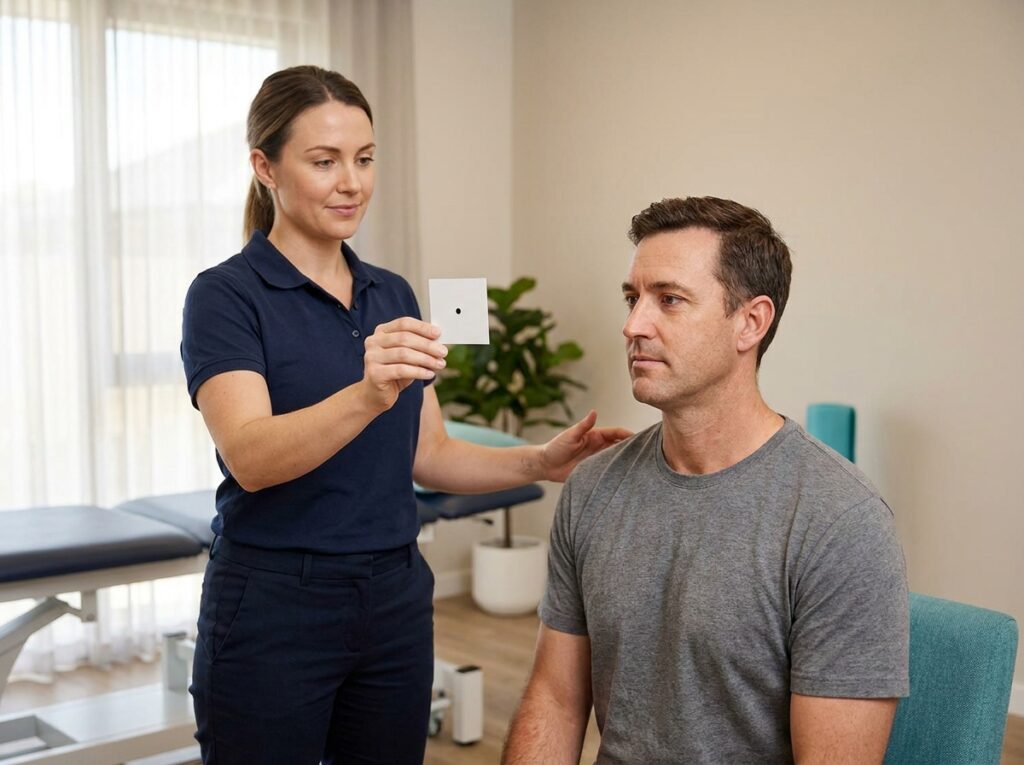
The physical portion may examine balance, walking, coordination, eye movements, head movements, strength, flexibility, and responses to position changes. Not every person needs the same tests, and findings may indicate that another health care professional should be involved before or alongside rehabilitation.
The purpose of assessment is to decide whether vestibular rehabilitation appears appropriate and to guide an individualized plan. It should not be assumed that every person with dizziness needs the same exercises or that rehabilitation is suitable for every possible cause.
When Vestibular Rehabilitation May Be Worth Considering
It may be reasonable to ask about vestibular rehabilitation when dizziness, vertigo, or unsteadiness keeps returning, limits normal movement, or creates concern about balance. Difficulty keeping vision clear while walking or turning the head may also be relevant. Some people seek help because they have started avoiding position changes, busy places, stairs, exercise, or other activities that provoke symptoms.
The goal of seeking an assessment is not to force movement through unexplained symptoms. It is to understand the pattern, determine whether rehabilitation may be appropriate, and identify activities that can be introduced at a suitable level. Progress varies, and no specific result or timeline can be promised.
For details about the clinic’s approach, you can learn more about vestibular rehabilitation at Remedy Physio Clinic. This information can help you prepare questions, but it does not replace an individual assessment.
Preparing for a Conversation About Your Symptoms
Before an appointment, consider noting the words that best describe the sensation. Explain whether you feel spinning, lightheadedness, swaying, imbalance, visual blurring, or something else. Record common triggers, the approximate duration of episodes, and how frequently they occur. Mention falls or near falls and any activities you now avoid.
It is also helpful to provide an accurate medication list and relevant health history. Dizziness can be complex, and complete information can help the clinician decide whether physiotherapy is an appropriate next step or whether further medical assessment should come first.
Take the Next Step in Richmond Hill
If recurring dizziness, spinning sensations, unsteadiness, or difficulty keeping your vision steady is affecting daily life, call Remedy Physio Clinic for a free consultation or book an appointment. The clinic can discuss your concerns and help determine whether a vestibular rehabilitation assessment may be an appropriate next step.
This article provides general information and is not medical advice. New, severe, or unexplained dizziness, vertigo, balance changes, or related symptoms should be discussed with an appropriate health care professional.
Please fell free to read our client’s testimonials on our Google page or leave us a review about your personal experience at Remedy Physio Clinic. Massage Therapy and Physiotherapy > Recovery in Richmond Hill